
Grading & Reshaping
Rework the existing surface to improve travel, restore shape and prepare it for additional material.
Grade • drain • compact
We repair ruts, potholes, washouts and lost crown by correcting the shape and water flow before placing and compacting new material.

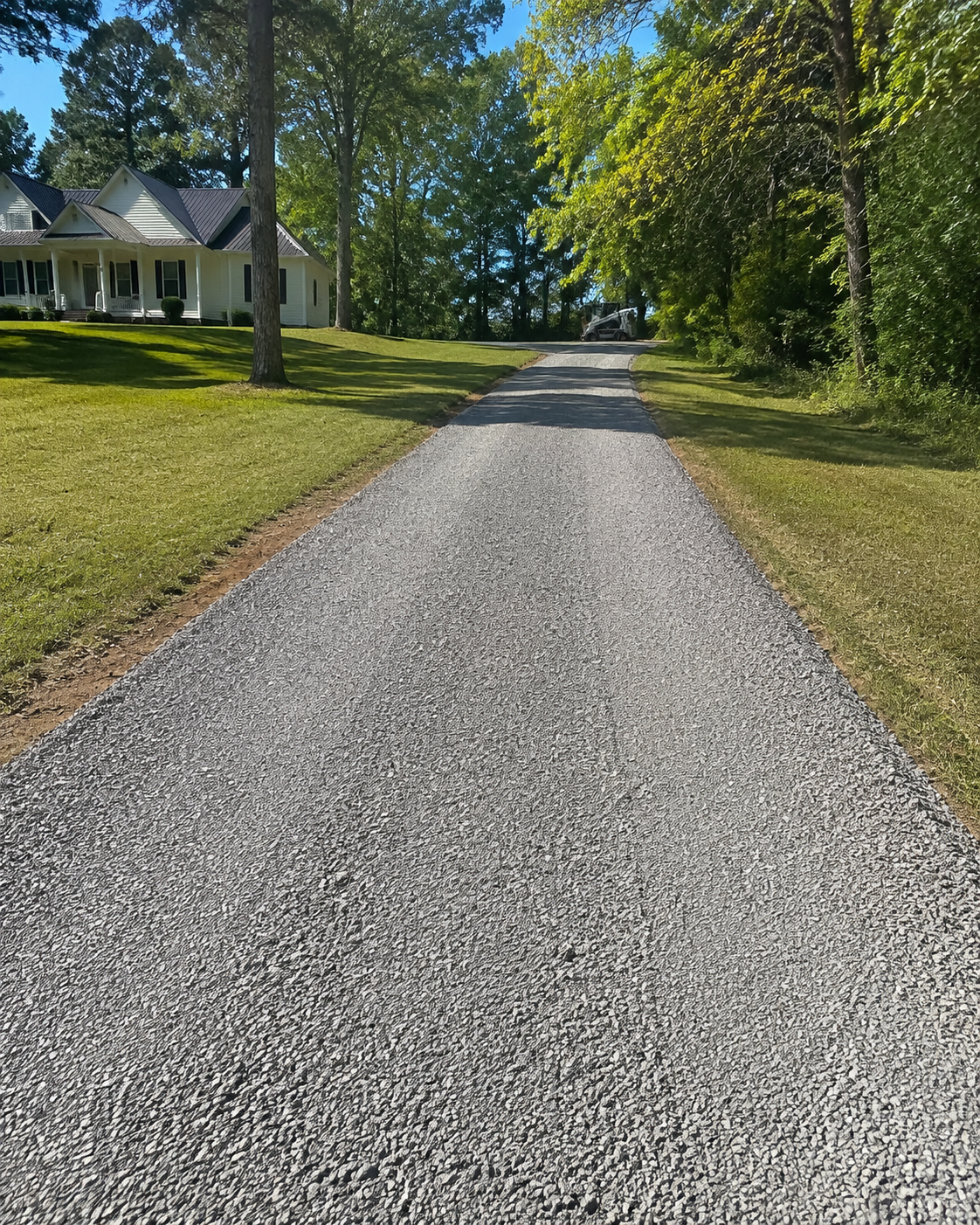
Fix the cause of repeat damage
Potholes and washouts often return when water remains trapped, runs down the tire paths or crosses the driveway without a controlled route.
We evaluate the existing aggregate, subgrade, driveway width, slope, crown, ditches and discharge points before recommending a repair level.
Driveway capabilities
The right scope depends on how much of the existing base can be reused and whether water management must be corrected at the same time.
Rework the existing surface to improve travel, restore shape and prepare it for additional material.
Cut into recurring problem areas and correct the surrounding grade instead of simply covering the holes.
Rebuild a functional high point so surface water can move toward the driveway edges.
Address water crossing, running down or collecting beside the driveway through grading and related drainage work.
Place the selected aggregate in controlled lifts and compact it for a tighter, more consistent surface.
Prepare and construct select new gravel driveways based on access, subgrade, drainage and intended use.
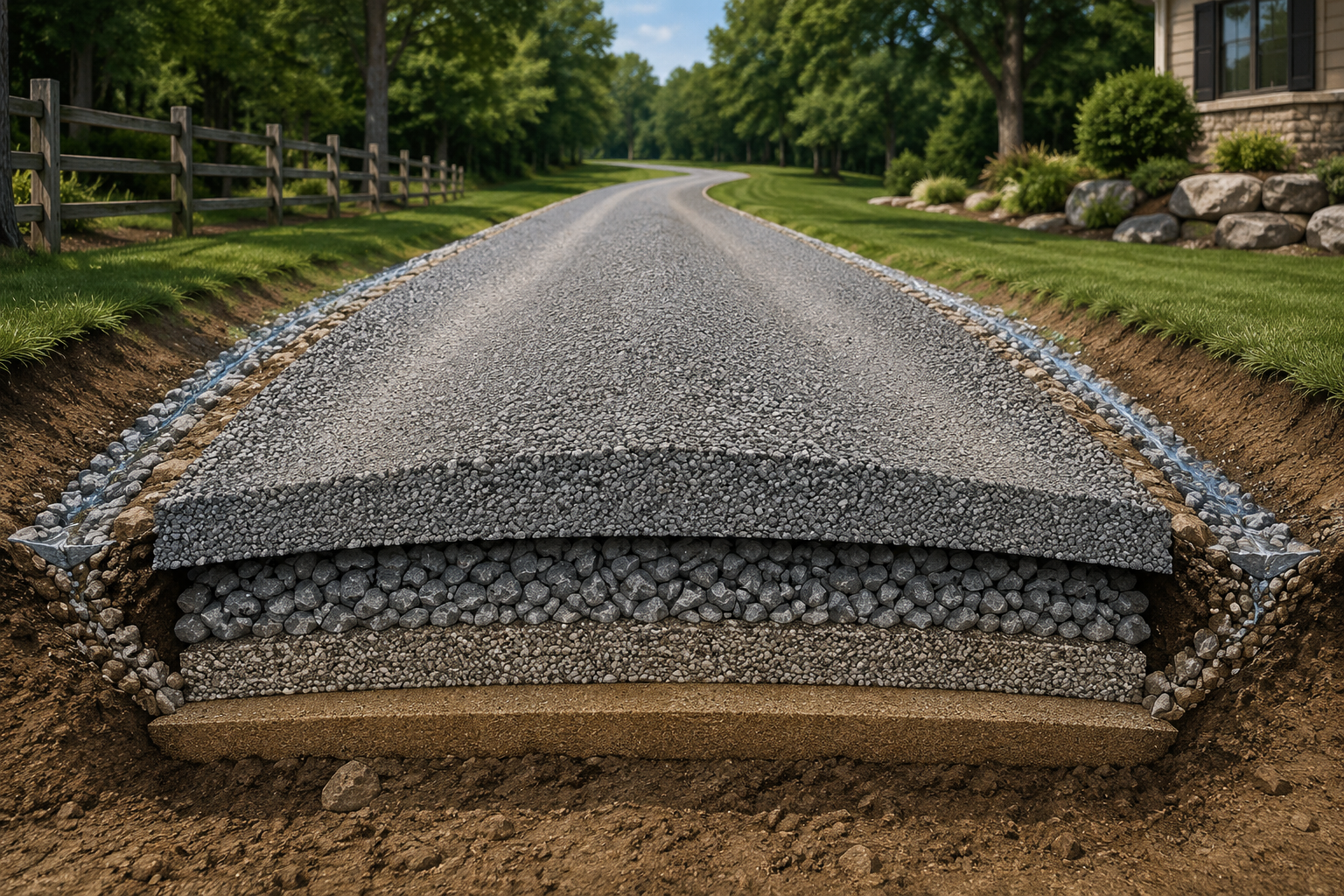
A working driveway profile
A durable gravel surface needs somewhere for water to go. We evaluate the driveway as a connected system rather than a strip of loose stone.
Our process
We separate surface maintenance from deeper base or drainage correction so the proposed work matches the condition of the driveway.
We review length, width, slopes, damaged sections, exposed subgrade and access for equipment and trucks.
We identify where runoff enters, crosses, follows or exits the driveway.
We reshape reusable material and place the selected aggregate where the approved scope requires it.
The surface is compacted, final drainage paths are checked and the work area receives a practical cleanup.
Project work & planning visuals
Real JM Precision project photos are identified as actual work. Illustrations explain how the recommended systems and structures fit together.
Gravel driveway FAQs
Material quantities and repair methods depend on field measurements, compacted depth and what the existing driveway can support.
Sometimes additional gravel is part of the repair, but covering potholes without correcting loose material, trapped water or poor shape often allows them to return. We first evaluate why the surface failed.
Many gravel driveways perform better with a controlled crown or another deliberate cross-slope. The correct shape depends on width, terrain, drainage outlets and how the driveway connects to surrounding grades.
Material selection depends on the existing base, soil, rut depth, drainage and intended traffic. A weakened driveway may need larger structural stone in selected areas before a compactable surface aggregate such as crusher run is placed.
Yes, depending on site conditions. Exposed shale or rock may require reshaping, added base or surface material, and enough compacted depth to create a practical travel surface.
Yes, when compaction is included in the approved scope. Controlled placement and compaction help seat the aggregate and improve surface consistency.
Yes. JM Precision will contact 811 before excavation when the planned work requires utility locating. Private utilities and customer-installed lines may require separate locating.
Recurring potholes usually point to trapped water, weak base material, traffic patterns or a low spot that was filled without being reshaped and compacted. Correcting the cause is more effective than repeatedly covering the hole.
Yes, depending on access and site conditions. The repair may include removing loose material, rebuilding the affected base, restoring the driveway shape and improving how runoff crosses or leaves the area.
We evaluate select ditch, turnout and culvert-related work when it is part of controlling driveway drainage. Existing elevations, right-of-way limits and the condition of the culvert affect the recommended scope.
Provide the address, approximate length and width, photos of the full driveway and close views of ruts, potholes, washouts and drainage trouble. Note steep sections, narrow access and the types of vehicles using it.
Show us the problem areas
Send the property location, approximate length and width, plus photos or video showing ruts, potholes, washouts and drainage concerns.
If the form does not appear, open the secure request form in a new window.